Bridging the Technical and the Human
At iData Global, we believe that talking about artificial intelligence without addressing ethics is leaving the conversation incomplete. Algorithms, no matter how advanced, don’t exist in isolation—they directly impact real decisions about people, clients, patients, and communities. That’s why responsible and ethical AI governance is not an add-on but the core element that ensures innovation creates sustainable, transparent, and trustworthy value. In our experience, this balance between the technical and the human is what makes the difference between projects that build trust and those that fade away.
Algorithmic Bias: The Invisible Risk that Undermines Trust
One of AI’s most pressing challenges is algorithmic bias. Bias emerges when training data reflects historical inequalities, sampling errors, or gaps in representativeness. The results can be devastating: from a credit model that discriminates against certain populations, to a healthcare algorithm that produces less accurate diagnoses for underrepresented minorities. The critical issue is that these biases often remain invisible—until they cause real-world consequences.
That’s why ethical governance requires us to talk about transparency and explainability. Transparency means organizations can trace and understand which variables influence a model’s decisions. Explainability (or explainable AI) goes one step further: ensuring that even non-technical users—such as doctors, clients, or business leaders—clearly understand why AI made a particular decision.
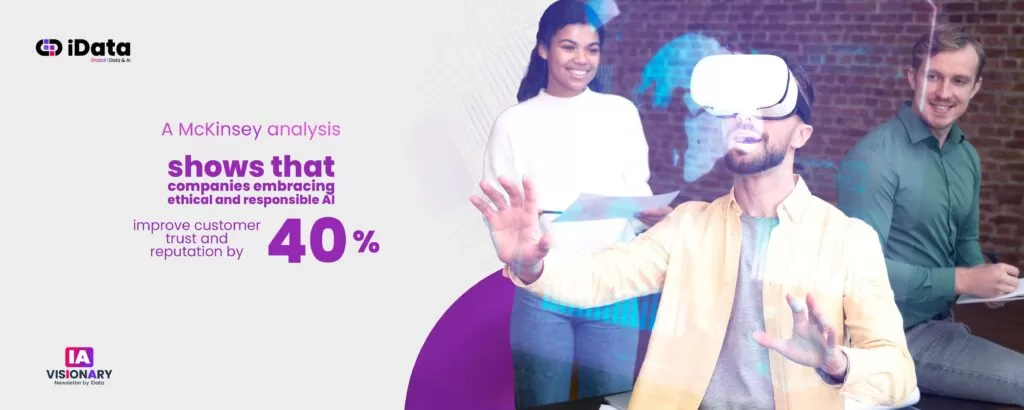
A McKinsey analysis shows that companies embracing ethical and responsible AI improve customer trust and reputation by 40%. This confirms what we’ve already seen in practice: ethics is not a brake on innovation, but a multiplier of value.
Governance Frameworks: From Principles to Practice
The challenge is moving from broad principles—fairness, equity, explainability, autonomy—to concrete practices within data science and business teams. This is where responsible AI governance frameworks come into play, acting as roadmaps to integrate ethics throughout the AI lifecycle.
Models such as the NIST AI Risk Management Framework and ISO/IEC 42001 provide clear guidance on managing risks related to bias, robustness, explainability, and privacy. These frameworks help organizations structure audit processes, define performance metrics that include fairness, and create internal policies that connect ethical principles with technical practices.
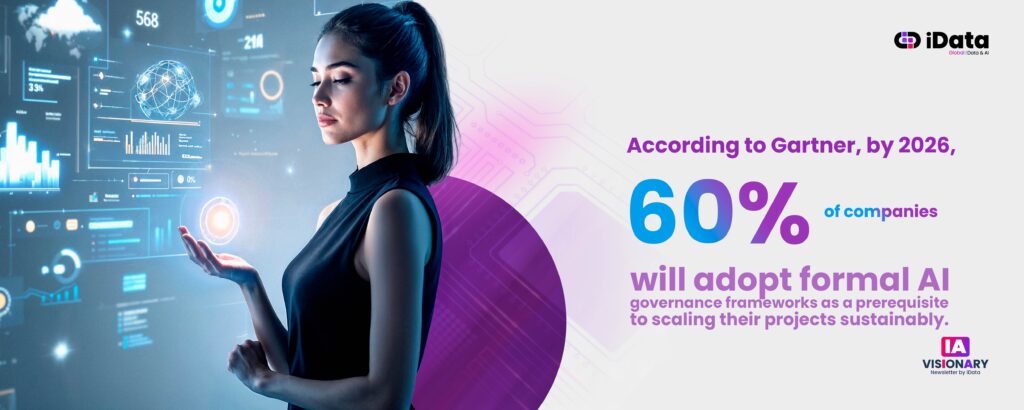
Moreover, adopting AI platforms that embed responsible governance methodologies helps organizations meet growing regulatory pressures worldwide. According to Gartner, by 2026, 60% of companies will adopt formal AI governance frameworks as a prerequisite to scaling their projects sustainably.
The Delicate Balance Between Innovation and Ethics
Organizations face a real dilemma: innovate quickly or ensure strong ethical oversight. The push to launch new solutions often leads to skipping audits or validation processes, while legal and compliance teams push for caution. The solution is not choosing one extreme but finding a sustainable balance.
At iData Global, we advocate for iterative processes: controlled pilots, transparent metrics, continuous monitoring, and gradual scaling. This approach doesn’t slow innovation—it makes it sustainable by preventing costly setbacks from flawed or harmful models. When ethics is part of the design, projects scale with trust and resilience, avoiding unnecessary risks.
From Talk to Action
In our implementations, we’ve seen that organizations that integrate ethics from the start achieve tangible benefits: reduced regulatory risk, stronger internal adoption, and better relationships with clients and partners.
A clear example comes from our work with Pactia, where we implemented a proof of concept with Azure OpenAI to optimize internal document search and analysis. The project automated queries, reduced search times, and improved decision-making efficiency by leveraging natural language processing algorithms to deliver accurate, contextual answers. The results spoke for themselves: 71% positive user feedback, streamlined workflows, and a scalable platform adaptable to different types of documents. Beyond the technical side, the impact lay in the trust Pactia teams gained by interacting with an ethical, transparent, and well-governed solution from the start.
In industries like finance, regulatory compliance is not just an obligation but an opportunity to stand out as a trusted organization. In healthcare, data traceability and model explainability strengthen trust between patients and professionals. In every case, ethical AI governance creates a competitive value that is difficult to replicate.
Humanity as the Compass on the AI Journey
Throughout this journey—biases, frameworks, metrics, audits—there is a risk of forgetting what matters most: people. Because at the end of the day, those who use, supervise, and are impacted by AI are human beings. In sensitive sectors such as healthcare, this becomes even more evident. A model can predict diseases, recommend treatments, or prioritize resources, but it is human sensitivity that ensures those recommendations are applied with empathy and respect.
At iData Global, we believe that human ethics is the compass that guides technology. AI can help us be faster, more precise, and more efficient—but only people can decide which boundaries must never be crossed. Algorithms must never replace ethical judgment, empathy, or responsibility. Technology serves humanity, not the other way around.
A Strategic Pillar, Not an Accessory
At iData Global, we understand that responsible and ethical AI governance is not optional—it’s a strategic pillar. Integrating explainability, fairness, traceability, and global compliance frameworks not only protects organizations but also positions them as trusted, transparent, and visionary leaders. Research from McKinsey and Gartner confirms it: companies that adopt these practices don’t just avoid risks—they strengthen their competitiveness and reputation.
We invite you to join our iData Global VIP Events: exclusive spaces where we share experiences, best practices, and cutting-edge trends in data governance and artificial intelligence. A unique opportunity to connect with leaders, learn from real-world cases, and build together the future of responsible AI.